
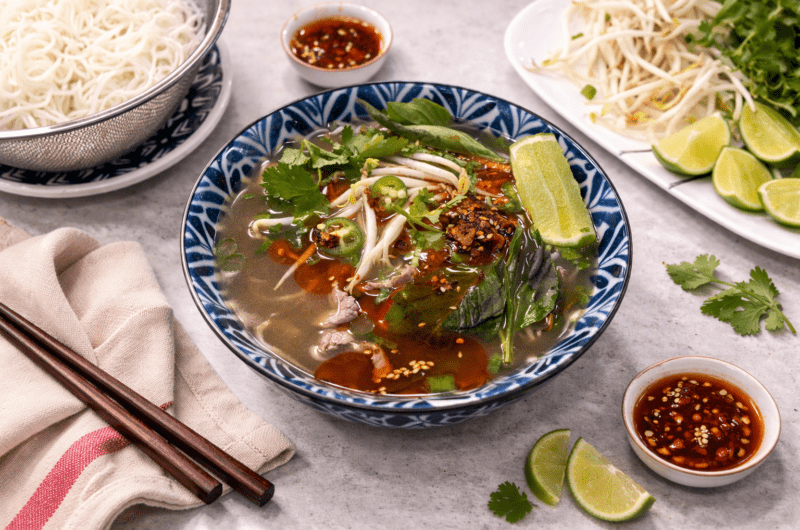
If there is one soup that defines comfort, aroma, and slow-cooked flavor, it is beef pho. This iconic Vietnamese noodle soup is built on a deeply aromatic broth made from roasted bones, charred aromatics, and toasted whole spices. Unlike quick soups, pho relies on patience, technique, and balance — and when done right, the result is a clear, golden broth that tastes rich without feeling heavy.
In this recipe, I slow-simmered my pho broth for 8 hours, developing deep layers of flavor using traditional techniques like parboiling bones, charring onions and ginger, and gently extracting spice aromas. I’ll also share a time-saving Instant Pot pho method so you can enjoy homemade pho even on busy days.
This homemade beef pho recipe is perfect for family dinners, cozy winter meals, meal prep, and restaurant-style pho at home.
What Makes Pho Broth Special?
Pho broth is not just beef stock. What sets authentic pho apart is the use of whole aromatic spices such as star anise, cinnamon, cloves, coriander seeds, fennel seeds, and cardamom. These spices infuse the broth with subtle sweetness and warmth without overpowering the savory base.
Another defining feature is the cooking technique:
- Bones are parboiled to remove impurities
- Aromatics are charred for smoky depth
- Spices are toasted to release essential oils
- Broth is simmered gently for hours
This layered process creates a broth that is clean, fragrant, complex, and restaurant-quality.
Ingredients for Beef Pho Broth
Broth Base Ingredients
- 2 lbs beef bones (marrow, knuckle, or mixed bones)
- 2 large white onions, halved
- 1 large piece ginger (5–6 inches), halved
- 5–6 quarts water (adjust as broth reduces)
- Salt to taste (start with 2 teaspoons)
- MSG (optional) – ½ to 1 teaspoon
- Fish sauce – 2 to 3 tablespoons
- Rock sugar – 1½ to 2 tablespoons
Pho Spice Blend (Based on My Spice Plate)
Lightly toast before use:
- 4 whole star anise
- 1 cinnamon stick (3–4 inches)
- 6 whole cloves
- 1 tablespoon coriander seeds
- 1 teaspoon fennel seeds
- 1 tablespoon black peppercorns
- 3 green cardamom pods
- 1 black cardamom pod (lightly crushed)
- ½ teaspoon cumin seeds (optional)
About Using Cumin in Pho
Traditionally, cumin is not used in Vietnamese pho. However, when added in very small amounts, cumin contributes subtle warmth and savory depth without overpowering the broth. If you enjoy slightly bolder aromatics, this optional addition can elevate complexity while still keeping the flavor balanced.
Protein, Noodles & Toppings
Protein & Noodles
- 2 lbs thinly sliced top sirloin beef
- Banh pho rice noodles (fresh or dried)
Traditional Pho Toppings
- Thai basil
- Fresh cilantro
- Green onions
- Bean sprouts
- Serrano peppers
- Lime wedges
- Chili oil (optional)
How To Make Beef Pho Broth (Traditional Stovetop Method)
Step 1: Parboil the Bones
Place beef bones into a large pot and cover with water. Bring to a boil and cook for 15 minutes. This removes blood residue and impurities that can cloud your broth.
Drain and rinse bones thoroughly. Clean your pot before proceeding.
This step is essential for achieving clear, clean pho broth.
Step 2: Char the Aromatics
Place halved onions and ginger on a baking tray and broil until lightly charred. You can also char them directly over an open flame.
Charring adds smokiness and depth that defines authentic pho flavor.
Step 3: Toast the Spices
Add all whole spices to a dry pan and toast over medium heat for 2–3 minutes until fragrant. Immediately transfer to a spice bag or cheesecloth bundle.
Toasting activates essential oils and intensifies aroma.
Step 4: Brown Bones and Aromatics
In your clean stock pot, add parboiled bones, charred onions, and ginger. Allow them to brown slightly for 5 minutes on medium heat.
This step boosts flavor through light caramelization.
Step 5: Simmer the Broth
Add to the pot:
- Spice bag
- 5 quarts water
- Salt and MSG
Bring to a boil, then immediately reduce heat to low.
Simmer gently for 8 hours, uncovered.
At the 4-hour mark, check liquid level and add additional water if needed.
Avoid aggressive boiling — slow simmering keeps broth clear and balanced.
Step 6: Final Seasoning
After about 7 hours of cooking:
- Add rock sugar
- Add fish sauce
- Adjust salt to taste
This balances savory, sweet, and umami elements.
Step 7: Strain the Broth
Remove bones, aromatics, and spice bag. Strain broth through a fine mesh strainer.
If desired, skim excess fat from the surface.
Your pho broth is now ready.
Instant Pot Pho Broth Method
If you want similar depth in less time, this Instant Pot version works beautifully.
Instructions
- Parboil bones separately (same method as stovetop).
- Char onions and ginger.
- Toast spices and place in spice bag.
- Add to Instant Pot:
- Bones
- Aromatics
- Spice bag
- 4½ quarts water
- Salt and MSG
- Pressure cook on High Pressure for 3 hours.
- Natural release pressure for 30 minutes.
- Strain broth.
- Add fish sauce and rock sugar.
- Adjust seasoning to taste.
How To Assemble Pho Bowls
- Place thinly sliced raw beef at the bottom of serving bowl.
- Pour boiling broth directly over beef to cook it instantly.
- Add cooked rice noodles.
- Top with bean sprouts, herbs, green onions, peppers, and basil.
- Finish with lime juice and chili oil if desired.
Serve immediately while hot.
Storage & Meal Prep Tips
- Store broth in airtight containers up to 5 days refrigerated
- Freeze pho broth up to 3 months
- Keep toppings separate
- Always reheat broth until boiling before serving
Frequently Asked Questions
Can I make pho without MSG?
Yes. MSG is optional but enhances umami flavor. You can slightly increase fish sauce instead.
Why parboil bones first?
Parboiling removes impurities and prevents cloudy broth.
Can I use other beef cuts?
Yes — brisket, flank steak, or beef shank all work well.
How much water should I use?
Start with 5 quarts for 2 lbs bones and top up during simmering.
Final Thoughts
Pho is not fast food — it is slow comfort. This long-simmered beef pho recipe creates a broth that is aromatic, balanced, and deeply satisfying. Whether you use the traditional stovetop method or the Instant Pot shortcut, this recipe delivers restaurant-quality pho at home.
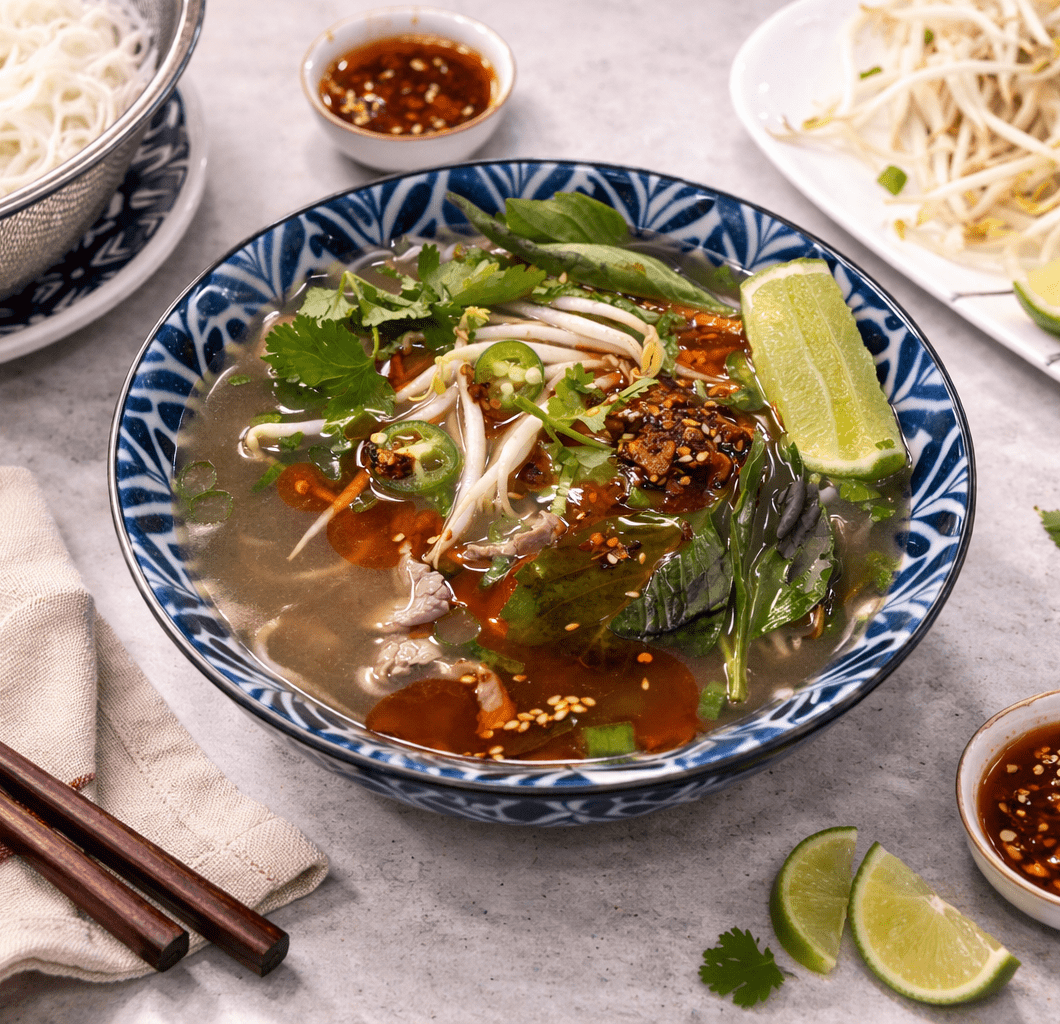
Authentic Beef Pho Recipe (Slow-Simmered Vietnamese Pho Broth)
6
servings35
minutes8
hours30
minutes450
kcalA slow-simmered authentic beef pho made with roasted bones, toasted spices, and charred aromatics for a clear, deeply flavorful broth topped with tender beef, rice noodles, and fresh herbs.
Ingredients
- Broth Base
2 lbs 2 beef bones
2 large 2 onions
1 large 1 ginger piece
5-6 qt 5-6 water
2 teaspoons 2 salt
1/2 – 1 Tsp 1/2 – 1 MSG (optional)
2-3 Tbsp 2-3 fish sauce
11/2-2 Tbsp 11/2-2 rock sugar
- Pho Spice Blend (Toast Before Using)
4 4 star anise
1 1 cinnamon stick
6 cloves 6 1tablespoon coriander seeds
1 teaspoon 1 fennel seeds
1 tablespoon 1 black peppercorns
3 3 green cardamom pods
1 1 black cardamom pod (lightly crushed)
1/2 tsp 1/2 cumin seeds (optional)
- For Serving
2 lbs 2 thinly sliced beef
Rice noodles
Thai basil
Cilantro
Green onions
Bean sprouts
Serrano peppers
Lime wedges
Chili oil
Directions
- Parboil beef bones for 15 minutes. Drain, rinse thoroughly, and clean the pot.
- Char onions and ginger under the broiler or over an open flame until lightly blackened.
- Toast all spices in a dry pan until fragrant and place into a spice bag or cheesecloth.
- Add clean bones and roasted aromatics to the stock pot and brown lightly for about 5 minutes.
- Add water, spice bag, salt, and MSG. Bring to a boil, then reduce heat to low.
- Simmer gently for 8 hours, topping up water as needed.
- During the final hour, add fish sauce and rock sugar. Adjust salt to taste.
- Remove bones and spice bag and strain broth until clear.
- Place raw sliced beef in serving bowls and pour boiling broth directly over the meat.
- Add cooked rice noodles and toppings. Serve hot.




)